types of sensors
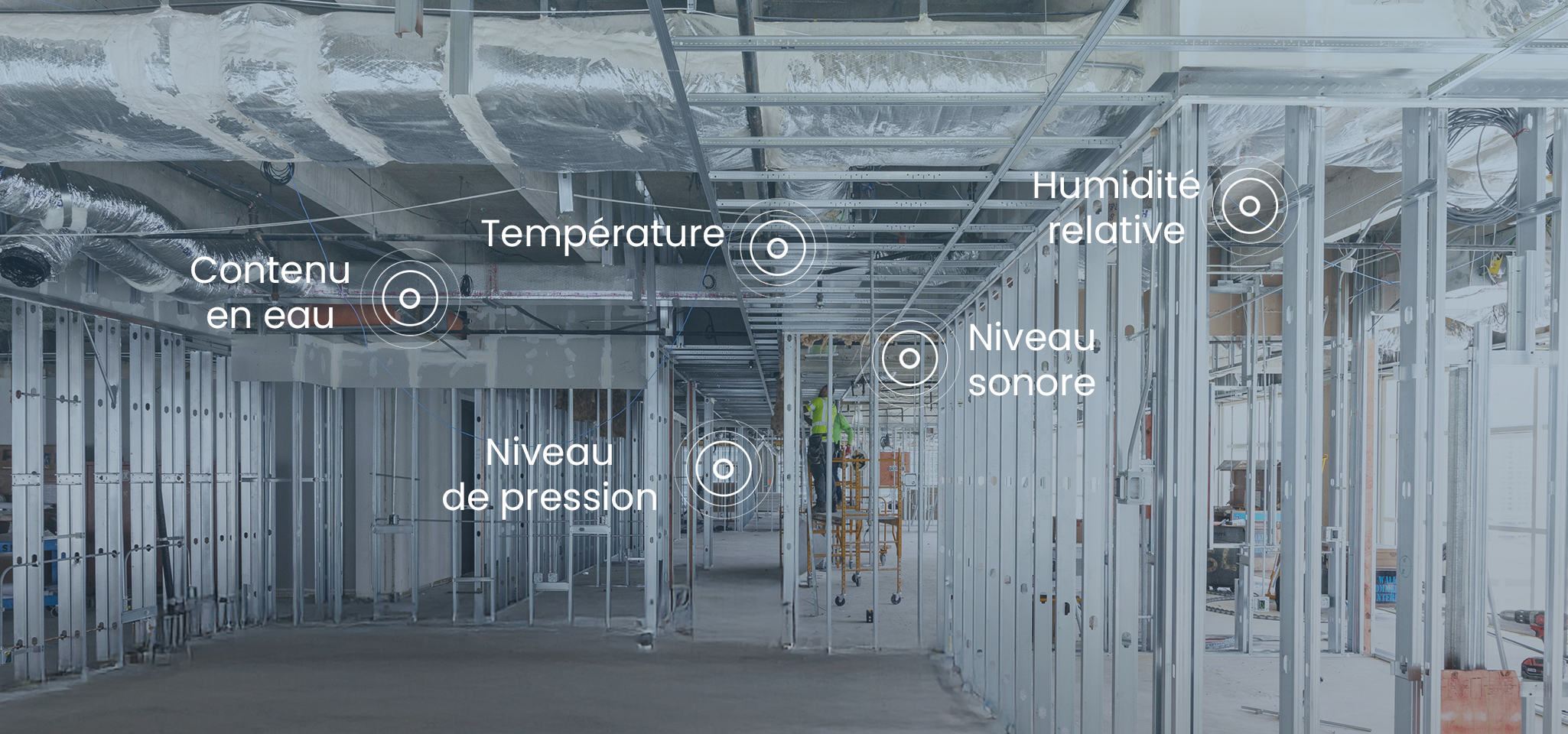
Material water content (WME), humidity, temperature, differential pressure, air quality (CO2, PM1.0/PM2.5/PM10 fine particles, HCHO/O3), brightness, noise level and water-leak detection.
Source : Assek Technologies

Services
Meet your project's compliance requirements: isolate a contaminated area, ventilate, filter, dehumidify, heat and more.
Understanding the challenge
Material water content (WME), humidity, temperature, differential pressure, air quality (CO2, PM1.0/PM2.5/PM10 fine particles, HCHO/O3), brightness, noise level and water-leak detection.
Source : Assek Technologies
Common compliance criteria on a construction site, measured using the same reference thresholds as drying work.
Source : Assek Technologies
Containment, ventilation, HEPA filtration and dehumidification are deployed as required, monitored by sensors and the Oblik platform to meet compliance requirements.
Source : Assek Technologies
The service
Whether on a job site, in an occupied building or in a healthcare facility, requirements can cover humidity, temperature, pressure and air quality. Without continuous monitoring, compliance relies on occasional inspections.
Our service combines three elements:
Temporary containment
To isolate sensitive areas.
Appropriate equipment
Ventilation, HEPA filtration, dehumidification and heating.
Connected sensors
To monitor humidity, temperature, differential pressure, material water content and air quality.
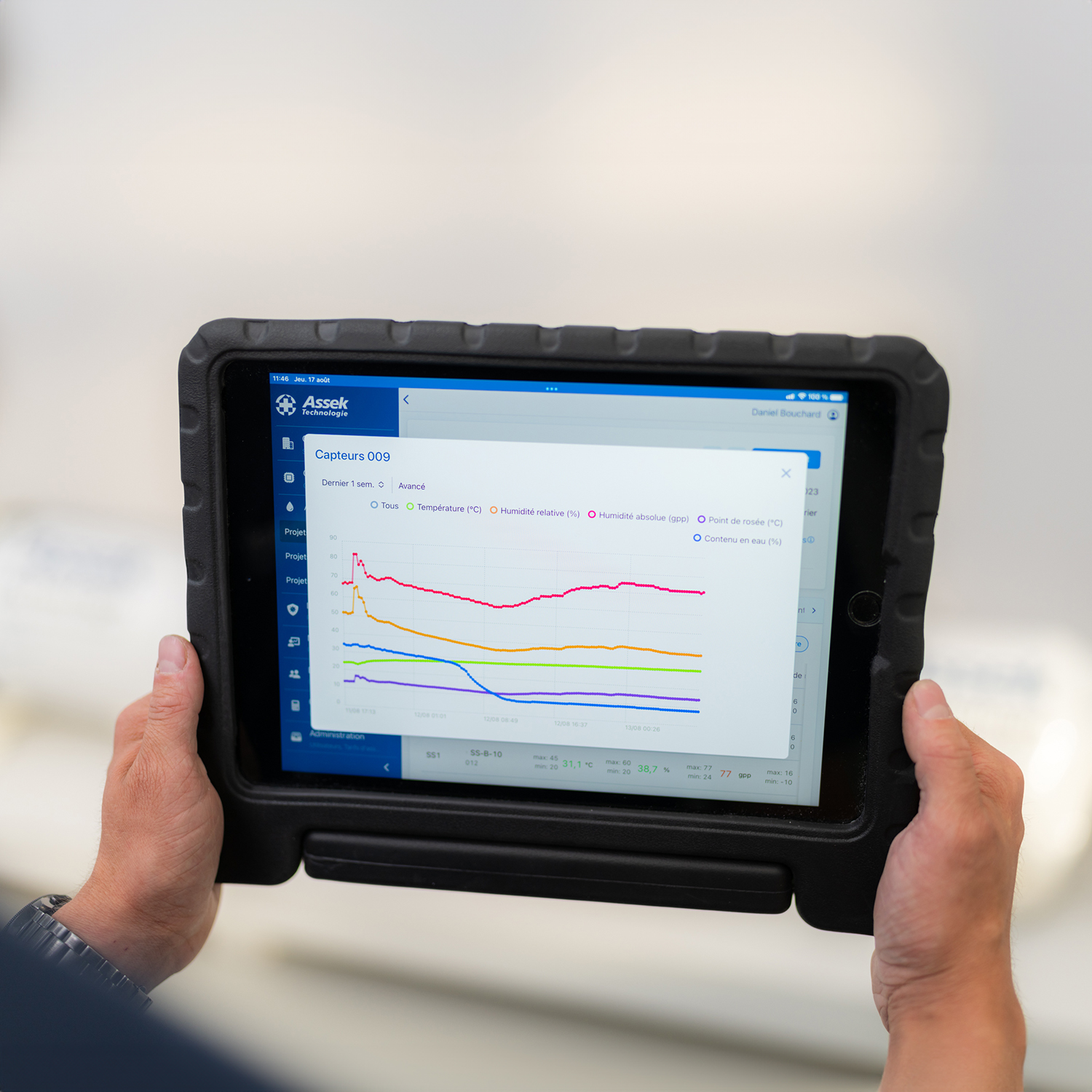
Oblik centralizes data, alerts the appropriate teams and can adjust equipment to maintain target conditions.
Our process
Initial assessment
We assess the project context, identify sensitive areas and determine the requirements to be met - humidity, temperature, pressure and air quality - based on the project and applicable standards.
Deploying equipment and sensors
We install temporary containment areas when required; ventilation, HEPA filtration, dehumidification and heating-control equipment; and the appropriate sensors: humidity and temperature, material water content (WME), differential pressure, and air quality (CO2, fine particles and HCHO/O3 as required).
Real-time monitoring and automated action with Oblik
Sensors transmit data continuously to Oblik, which centralizes it and can automatically activate ventilation, filtration or dehumidification, or adjust heating, to maintain required conditions. Material moisture follows the same thresholds as post-loss drying work (< 15% WME, < 60% RH). Air-quality thresholds are set according to the project's requirements. In healthcare facilities, differential pressure is monitored continuously, with an automatic alert if an imbalance occurs.
Documentation and final report
Sensor data, including the history of alerts and automated actions initiated by Oblik, are centralized and documented in the Secur platform. A final report demonstrates compliance with project requirements and includes practical recommendations for your building.
Benefits
Beyond monitoring, Oblik can automatically adjust ventilation, filtration, dehumidification or heating to maintain required conditions.
Isolate sensitive areas with temporary containment or pressure control in healthcare.
Humidity, temperature, material water content, differential pressure and air quality are monitored and controlled with dedicated sensors.
Access a complete history documented in Oblik, along with practical recommendations.
Why Assek
At Assek, environmental conditions and jobsite control goes beyond sensors. It combines physical equipment – containment, ventilation, HEPA filtration, dehumidification and heating control – with a sensor network orchestrated by Oblik, which acts automatically to maintain the conditions your projects require.
All data are then documented in Secur to support your decisions and demonstrate compliance with applicable requirements. Our expertise covers construction sites, occupied buildings and healthcare facilities that require isolation of contaminated areas, with the same rigour we apply to post-loss drying work.