Materials can be preserved
Affected materials can be preserved through specialized professional drying performed quickly after water damage.
Source : Assek Technologies data

Water Damage Response
Dry your buildings without demolition and accelerate occupants’ return to normal with a proven technical approach grounded in data and asset preservation.
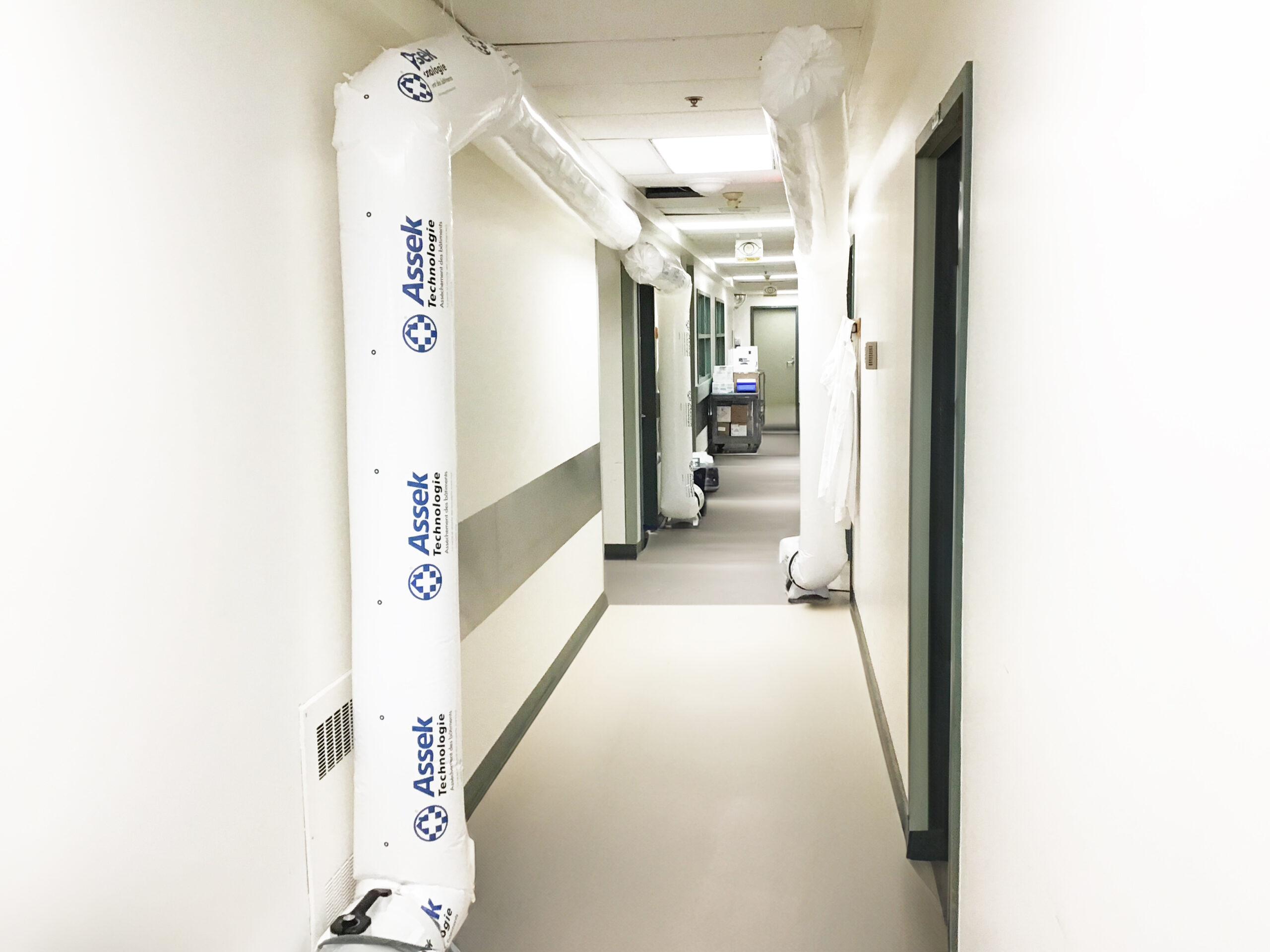
Preserve instead of rebuild
Affected materials can be preserved through specialized professional drying performed quickly after water damage.
Source : Assek Technologies data
Technical non-destructive drying can return spaces to service up to four times faster than traditional cleanup and reconstruction approaches.
Source : Comparative studies by Canadian insurers
Each water category requires an appropriate drying, containment, and environmental control strategy to protect occupants and maximize material recovery.
Source : IICRC S500

The service
Technical non-destructive drying removes moisture from affected materials so they can be restored and preserved rather than replaced.
With our Secur-Air™ technology, specialized equipment, and field expertise, we help clients reduce costs, timelines, and reconstruction work. Our approach is adapted to the water category, affected materials, and risks present in the building. When required, we implement containment, HEPA filtration, and environmental control measures to protect occupants and adjacent spaces.
Whether the damage involves Category 1 or 2 water or requires more complex structural drying, our specialists determine the optimal response strategy to restore and preserve as many materials as possible, monitor drying progress, and accelerate the return to normal occupancy conditions.
Our process
Our team adapts each response to site conditions, affected materials, and the risks present in the building.
Deployment and site safety
Our teams assess site conditions and implement the measures required for a safe response. Depending on the water category and risks present, containment, HEPA filtration, and environmental control measures may be deployed.
Installation of drying equipment
Equipment is positioned strategically to remove moisture from affected materials while preserving assets and reducing reconstruction work.
Drying monitoring and adjustments
Our specialists take regular readings to monitor drying conditions and adjust the strategy as needed until the objectives are achieved.
Validation and return to normal
Once drying criteria are met, we validate the results, remove the equipment, and confirm that the spaces can return to normal occupancy conditions.
Benefits
A specialized approach preserves more materials while reducing the operational impact of the damage.
Preserve materials and limit demolition and reconstruction work.
Return spaces to service faster and reduce the impact on occupants, operations, and the building’s daily activities.
Containment, HEPA filtration, and environmental control measures are implemented when required to limit risks associated with the damage.
Restore and preserve as many affected materials as possible while maintaining a safe environment aligned with industry best practices.
Why Assek
At Assek, we combine specialized expertise, Secur-Air™ technology, and a proven methodology to restore and preserve materials affected by water damage. This approach helps reduce reconstruction work and accelerates the return to normal for occupants.
We aim to restore and preserve as many materials as possible while protecting occupants and reducing the impact of the damage.
Non-destructive drying removes moisture from affected materials so they can be restored rather than replaced. This approach reduces reconstruction work, response timelines, and impacts on occupants.
Every water damage event is unique. Our specialists evaluate the water category, affected materials, and risks present to determine the best response strategy. In most situations involving clean or slightly contaminated water, a large proportion of the materials can be restored.
Secur-Air™ technology injects air into damp wall assemblies and cavities to accelerate moisture removal directly at the source. This approach provides targeted material drying while limiting demolition work and operational interruptions.
Our teams take regular readings throughout the response to monitor drying conditions. Results are validated before equipment is removed to confirm that drying objectives have been achieved.
Yes, when the situation requires it. Depending on the water category and risks present in the building, we can deploy containment, HEPA filtration, and environmental control measures to protect occupants and adjacent spaces during the work.
Compared with traditional approaches, non-destructive drying generally preserves more materials, reduces restoration costs, accelerates the return to normal, and limits operational interruptions.
Yes. With Secur™, drying data, field readings, work progress, and project information can be centralized and viewed throughout the response.
Speak with our team to determine the drying strategy best suited to your building.